Property types
Flat roofs on retail plazas
A plaza roof is a wide, low roof over many different stores, each with its own rooftop equipment, ductwork and drains. One leak can close a unit, so the aim is fewer surprises and short disruptions.
- Strip malls and plazas
- Landlords and property managers
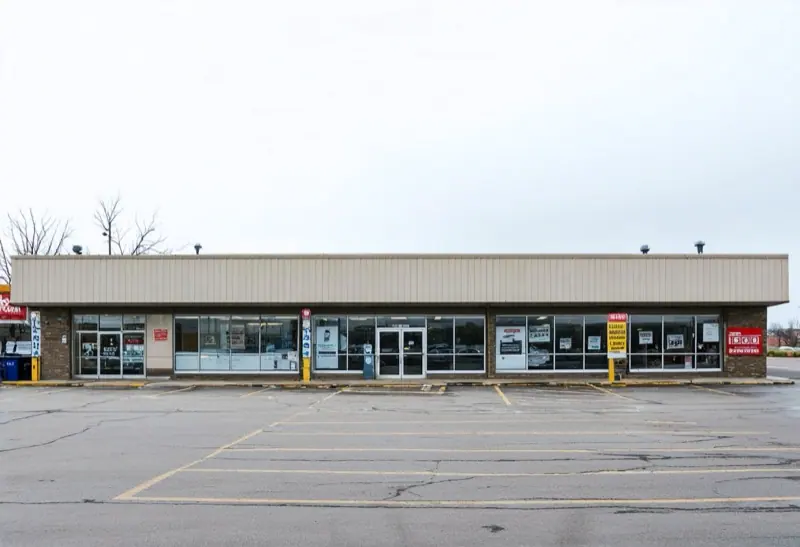
What is different about a plaza roof
Plazas built in the 1960s to 1990s often have a tar and gravel or modified bitumen roof sitting on steel or concrete deck. Tenants change over the years, and every new tenant adds rooftop equipment, exhaust fans or pipe penetrations. Over time the roof becomes a patchwork of flashings from different trades.
Customers and delivery trucks come and go below, which makes ground safety the first planning question. Falling debris, crane lifts and hot work are all kept away from storefronts and entrances during opening hours.
Problems we see most
Leaks around rooftop units
Curbs, refrigerant lines and electrical conduits all pierce the membrane. See skylight and penetration repair.
Ponding between units
Low spots at mid-span hold water for days after rain. See ponding water.
Open seams from foot traffic
HVAC service techs walking to units wear the membrane. See open seams.
Blocked internal drains and scuppers
Plazas often drain to the rear or to internal drains that nobody has checked in a long time. See clogged drains.
Neighbouring tenant damage
A leak in one unit often shows up in the next one over; it follows the deck.
Materials that tend to suit
TPO
Large white sheets welded in place, common on commercial roofs. Commonly 15 to 25 years. See TPO.
PVC
Good where grease or chemicals from restaurant exhaust reach the roof. See PVC.
Modified bitumen
A heavier, layered option that stands up to foot traffic. See modified bitumen.
Coating
For a roof that is sound but sun-worn. See roof coating.
How a plaza roof job is planned
Roof survey and moisture check
Mark wet insulation, drains and each rooftop unit on a plan.
Phasing
Work in sections, so a section is open at most one day, and each night’s weather is covered.
Equipment coordination
HVAC units need to be lifted or disconnected by their own trades; build that into the schedule.
Ground safety
Fenced drop zones, signage, and staging in a quiet corner of the parking lot.
What the landlord or manager should prepare
Tenant list and lease notes
Which tenants have rooftop equipment and any lease rules about roof access.
Roof drawings
Original plans or past reports, even if incomplete.
Parking and truck access
Where the crane or hoist can stand, and which days the lot is quiet.
Equipment contacts
Names of the HVAC and electrical contractors who may be needed.
Starting prices
| Item | Starting price |
|---|---|
| Commercial roof inspection and report | from $450 per roof |
| Commercial roof replacement | from $8 per sq ft |
| Roof coating (restoration) | from $3 per sq ft |
Starting prices in CAD before 13% HST, based on typical Ontario contractor rates (mostly Toronto and the GTA). The final price depends on roof size, access, the layers to remove, the membrane, drains and flashings, and is confirmed in your written quote.
Why plazas leak at the same places
Look at where past patches are and you will usually see a pattern: the back corner where two roof levels meet, the line of curbs along the back wall, the drain at the lowest point. Plaza roofs rarely fail evenly. They fail at details, and details are cheaper to fix than a whole roof, if they are found early.
A walk of the roof with a plan, dated photos of each patch and a list of tenants with equipment gives a landlord a repair budget for the year and an honest view of when the field of the roof will need replacing.
Questions from plaza owners
Can stores stay open during the roof work?
Usually yes. The work is phased, ground areas are fenced, and noisy tasks are scheduled with tenants. Restaurants and clinics may need special times.
Who reconnects the rooftop units?
The trades who own the equipment, with the roofer sealing the curbs and flashings.
How do we avoid repeat leaks?
Add a walk pad route to units, fix drains and set a twice-yearly check. See flat roof maintenance.
Leak, damage or an old flat roof?
Send a few details and photos. We reply by email with next steps and a written quote.