Guide
Choosing a flat roof material
No membrane suits every roof. The right one is the one that suits your roof, your budget and who will be walking on it. Here is how the five common options compare.
Start with the roof, not the product
Before you compare membranes, answer four questions. How big is the roof? How much foot traffic will it take? Does anything on it (kitchen exhaust, chemicals, a deck) attack roofing? And what does the structure below allow? A small house roof with one drain and no traffic has different needs than a plaza roof with rooftop units.
Then compare the materials on cost, service life, how they are installed, and how easy they are to repair in fifteen years.
Quick comparison
| Material | Starting price | Commonly lasts | How it is installed |
|---|---|---|---|
| EPDM | from $8 per sq ft | 20 to 30 years | Rubber sheet, adhered or ballasted, seams taped or glued |
| TPO | from $9 per sq ft | 15 to 25 years | White sheet, seams heat-welded |
| PVC | from $11 per sq ft | 20 to 30 years | Sheet with heat-welded seams, resists grease and chemicals |
| Modified bitumen | from $8 per sq ft | 15 to 25 years | Layered rolls, torch-on, cold-applied or self-adhered |
| Built-up roofing | from $9 per sq ft | 20 to 30 years | Layers of felt and asphalt, usually gravel on top |
Starting prices are for replacement before HST. See [pricing](/pricing/) for the full table.
Where each one fits
EPDM
Small to mid-size roofs with few penetrations. Simple, flexible in cold, and easy to patch. Black colour absorbs heat, which can help melt snow and costs a little on cooling.
TPO
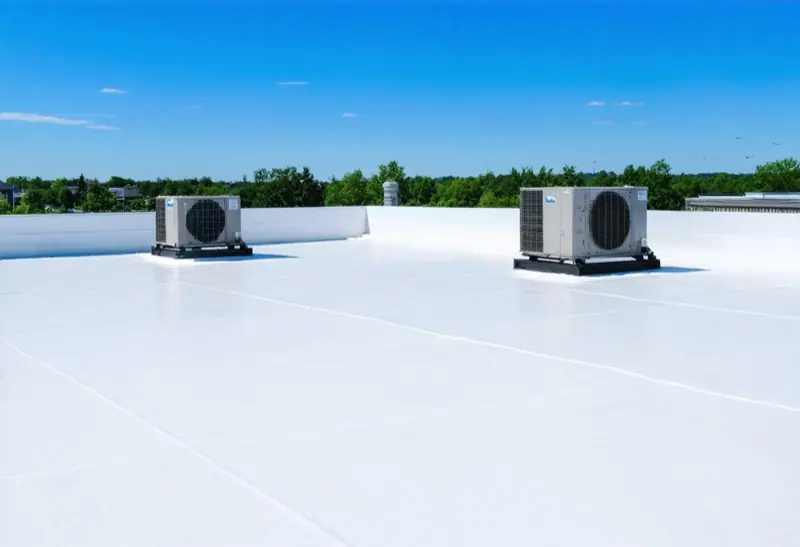
Large, open commercial roofs where a white reflective surface is useful. Quality varies between manufacturers, so ask which product and thickness is quoted.
PVC
Roofs exposed to restaurant exhaust, grease or chemicals, and complicated roofs with many details. Often priced a little higher.
Modified bitumen
Roofs with traffic, from service techs or a terrace. Torch-on is fast but needs fire planning; many contractors use cold-applied or self-adhered versions where a torch is unsafe.
Built-up roofing
A familiar system on older commercial buildings and one with a long track record. Heavy, with a hot or cold-applied installation, so it needs a deck that carries the load.
Ontario conditions that matter
Freeze–thaw cycles move roofs. Cold snaps stiffen some materials, and warm spells expand them. A membrane has to stay flexible and keep its seams sealed through hundreds of these cycles in its lifetime. Heavy snow load, ice at drains and spring melt also test every detail.
For this reason the installation matters as much as the material. A well-installed lower-priced membrane often outperforms a poorly installed premium one. The things to look for are clean seams, well-fastened edges, properly detailed drains and flashings, and a written scope that names each layer.
Ask these before you choose
Is the roof going to be walked on?
If yes, add walk pads or choose a tougher membrane.
Do you want a white or black roof?
White reflects heat and lowers summer cooling; black helps snow melt.
How will it be repaired later?
Ask what a typical repair looks like and whether any roofer can do it or only one installer.
What is the full scope?
Insulation, tapered layers, edge metal and flashings change the real price. See flat roof cost.
What does the manufacturer ask for?
Some membranes have specific installation rules that your contractor should follow. See hiring a flat roofer.
Repairs in year fifteen
Think ahead to the first repair. EPDM and modified bitumen are patched with materials most roofers carry. Heat-welded sheets such as TPO and PVC are repaired by welding a new piece over the defect, which needs the right equipment and a clean, dry surface. Built-up roofs are repaired in layers. None is hard for an experienced crew, but ask whether the product is widely available in Ontario so repairs do not depend on a single supplier.
Also think about the next replacement. Adhered or fully bonded systems are harder to lift than loose-laid ones, and a heavy ballast of gravel has to be removed and disposed of. The material you choose now sets the cost of the tear-off in twenty years.
Reflective roofs and incentives
A white or light membrane reflects sunlight and can lower summer heat in the room below. In Toronto, a city incentive for cool roofs has existed for membranes that meet a reflectance standard, and funding must be approved before work begins; eligibility and amounts change, so check the City’s site first. Ask the roofer for the product’s reflectance data if you want to apply.
Colour is a trade-off in Ontario. A dark roof absorbs heat in winter and helps snow melt, while a light roof saves energy in summer. For most buildings with cooling loads or rooftop equipment the light option is worth pricing. For a small unheated garage it makes little difference.
Questions about materials
Which material is cheapest over time?
Not always the cheapest to buy. Divide the price by the years it commonly lasts, then add the cost of upkeep. See how long a flat roof lasts.
Can I mix materials on one roof?
Different membranes are sometimes used on one building, for example a terrace and a main roof, but they must be compatible at joints. Ask the roofer to show how the transition is detailed.
What about shingles or metal roofs?
Those are for sloped roofs and are not part of the work described on this site.
Leak, damage or an old flat roof?
Send a few details and photos. We reply by email with next steps and a written quote.